
Cranial Facial Release

Cranial Facial Release
Cranial Facial Release (CFR) is an advanced endonasal “Balloon-Assisted” cranial adjusting technique that has been used quite successfully in the treatment of various neurological and structural disorders.
There are very few doctors who are certified in CFR Technique. CFR Doctors are required to undergo extensive post graduate training to become qualified in this specialized procedure. CFR Doctors are cranial adjusting experts.
TO UNDERSTAND HOW CFR WORKS …
it is important to realize that the skull is NOT one solid bone. It is made up of 22 individual bones that actually MOVE every time you inhale – or at least they are supposed to. Every time you inhale, the cranium expands – every time you exhale the cranium relaxes and contracts with the purpose of pumping Cerebral Spinal Fluid throughout the brain and spinal cord.
THE OBJECTIVE OF CFR TECHNIQUE …
is to mobilize the bones in the face and cranium and to open up the breathing passageways with the purpose of mobolizing the cranial bones and facilitating normal cranial function.
How This Technique Is Performed
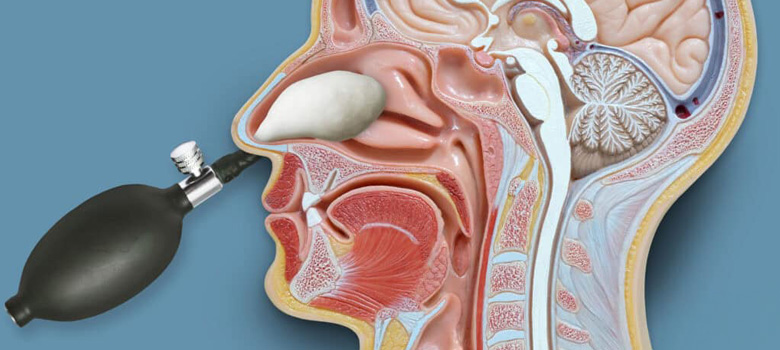
CFR technique is performed by inserting tiny balloons in the nose (the naso pharynx) then quickly inflating them to mobilize the bones of the face and cranium. It feels very similar to the sensation experienced when jumping into a swimming pool and having water shoot up your nose. The whole procedure takes about 2 to 3 seconds, and consists of a series of 4-6 treatments over a 7-1O day period.
Treat The Cause Not The Symptom
Symptoms are usually a sign of dysfunction in the body. If symptoms are “masked” for long enough without addressing the cause of the problem, this “long term dysfunction” leads to a breakdown in the system, which eventually gives rise to disease.
Most people who come in for CFR treatment are often last resort patients who have tried everything else first.
CFR often succeeds where other forms of conventional treatment have failed.
Conditions That Respond Favorably to CFR Treatment
- Breathing Disorders Sinus Conditions
- Snoring
- Sleep Apnea
- Migraine Headaches Head Trauma
- Post Concussion Syndrome
- Chronic Fatigue Syndrome
- Trigeminal Neuralgia
- Facial Paralysis
- Bell’s Palsy
- Tinnitus
- Vertigo
- Seizures
- Strokes
- Insomnia
- TMJ Disorders
- Learning Disorders
- Attention Deficit Disorder
- Neurological Disorders
- Emotional Disorders
- Hearing Impairments
- Vision, Stigmatism Glaucoma
- Anxiety
- Autism
- Depression
- Neurosis
- Epilepsy
- Down Syndrome
- Cerebral Palsy
- Multiple Sclerosis
- Muscular Dystrophy
- Parkinson’s Tremors